
Albert Invent is a new software platform for chemists and materials scientists – the people who combine substances in the lab to make products for the modern world.
The company doesn’t disclose who or what it is named after.
Albert Einstein seems the reasonable guess. But an even better fit is someone further back in time.
An early advocate of empirical science
Albertus Magnus was a 13th-century scholar later named the Patron Saint of Natural Scientists. Known as Doctor Universalis due to his expertise in every field of knowledge, Albertus was an important figure in the history of science.

Saint Albertus Magnus, a fresco by Tommaso da Modena (1352), Chapter hall of Convent of St. Nicholas, Treviso, Italy. Public Domain, https://commons.wikimedia.org/w/index.php?curid=133736
He famously declared:
“The aim of natural science is not simply to accept the statements of others, but to investigate the causes that are at work in nature.”
In an era that valued ancient texts more than new evidence, this was an unusual sentiment.
Albertus was declaring himself an empiricist not content with the received wisdom of Aristotle and other revered authorities.
Over years, he travelled across Europe, documenting observations on everything from mineralogy to alchemy and botany (the precursor to modern pharmacology). In his work De Mineralibus (On Minerals), Albertus described how materials behave when heated, combined, or treated, validating his claims with the Latin phrase “fui et vidi experiri” – “I was there, and I observed the experiment”.
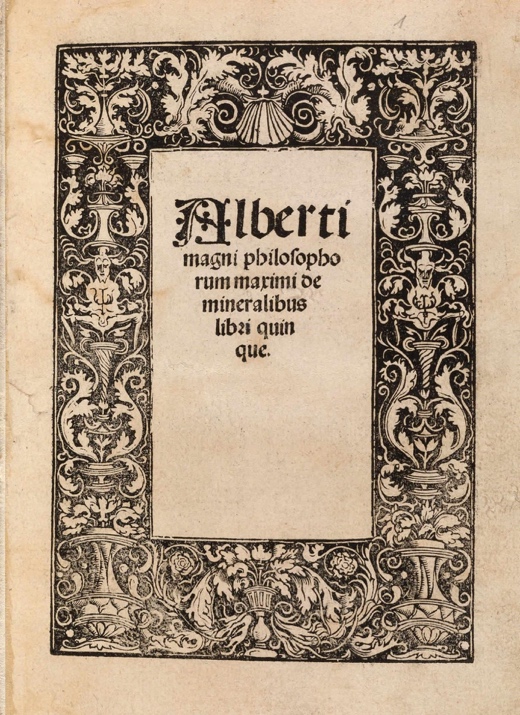
Title page from De Mineralibus Libri Quinque. Augsburg: Sigmund Grim[m] and Marx Wirsung, 1519.
https://xray-exhibit.scs.illinois.edu/ImagePages/MagnusImage1.php
The Modern Alchemist’s Dilemma
Today’s scientists face a challenge Albertus would recognise, though on a scale he could never have imagined – the sheer volume of combinatorial possibilities. If you choose 10 ingredients to mix, from a list of 100, there are 17.3 trillion potential combinations.
Consider a product as apparently simple as shampoo. To the consumer, it’s just soap in a bottle. To a formulation scientist, it’s a complex and delicate matrix of surfactants (for cleaning), polymers (for viscosity), preservatives (for shelf life) and fragrances (for experience).
If you change the concentration of the surfactant by 0.5%, you might ruin the viscosity. If you swap the polymer to adjust the thickness, you might destabilise the preservative. Thousands of experiments are required to find a workable balance. Without a system to reliably track every failure and success, this data becomes a graveyard of abandoned knowledge.

The Alchemist’s dilemma: balancing ingredients for the perfect formulation. Image: Gemini | Nano banana
From Consumer Goods to Life-Saving Cures
The challenge is even more intense when graduating from consumer goods to biomedical innovation. In the development of new therapeutics, the “ingredients” are part of a complex whole. Whether formulating a lipid nanoparticle for vaccine delivery or stabilising a monoclonal antibody, the chemist is battling the same combinatorial mathematics.
In biomedical product development however, the cost of lost data isn’t just a bad hair day; it’s millions of dollars, delayed clinical trials or rejected FDA submissions. The need for what Albertus Magnus championed – rigorous, organised and verifiable observation – is greater than ever.
The “Doctor Universalis” is an AI
Back to Albert Invent. This software as a service (SaaS) is an “AI-native” system, meaning that artificial intelligence has been built in from the start, not added later. It’s designed to organise, analyse and reuse experimental data generated in chemistry laboratories. A shared system of record is combined with machine learning models trained on large public molecular datasets and on proprietary experimental data supplied by its users.
The platform supports several functions. It screens candidate molecules computationally before laboratory testing, helps prioritise experiments based on expected information value, and links formulation choices to safety and regulatory constraints. The aim is to reduce the number of physical experiments undertaken while preserving scientific judgement over direction and interpretation.
In this sense, the platform echoes Albertus Magnus’s emphasis on disciplined observation and recorded experience but at tremendous scale and speed now made possible by modern computational systems.
Limits and evidence
Platforms like Albert Invent aren’t magic, they operate within the constraints of people, process and technology.
Outputs depend on training data and the way experimental problems are presented. If historical data contains biases, the search space for solutions may shrink or be distorted, excluding unfamiliar materials and unconventional approaches that might still work. Decisions about which experiments to record, how outcomes are measured, and which variables are prioritised influence subsequent recommendations.
The platform relies on consistent data capture. If data entry becomes burdensome or misaligned with laboratory workflows, participation may decline, reducing the completeness of the shared record. Organisational adoption and culture therefore play an important role in realised value.
Albert Invent itself has not yet been evaluated in published, peer-reviewed studies. As an enterprise R&D platform it’s being assessed through internal performance metrics, case studies and cycle-time reduction. Reported benefits have not been formally evaluated in published comparative studies – or not any that I could find.
At the same time, a large volume of peer-reviewed research supports the underlying methods including machine learning for materials discovery, simulation-guided experiment selection, learning from failed experiments, and reduction of large combinatorial search spaces.
Conclusion
If Albert Invent’s founders were looking for a name associated with systematic observation and careful accumulation of knowledge, Albertus Magnus is a fitting reference.
Eight centuries after Albertus Magnus recorded what he saw in furnaces and crucibles, chemistry produces data at a scale that no individual can absorb alone. Platforms like Albert Invent are a response to the challenge: an attempt to preserve and use experimental data, reduce wasted effort and support informed choice in complex design spaces.
Whether this approach delivers on its promise will become clearer with time and independent evaluation. Its value, like that of chemistry itself, will depend less on tools than on how well they are used. Ultimately it will be judged by how the resulting products stand up to use in the real world.
Readings
Butler et al. Machine learning for molecular and materials science. Nature 559, 547–555 (2018). https://www.nature.com/articles/s41586-018-0337-2
Gómez-Bombarelli et al., Automatic chemical design using a data-driven continuous representation of molecules. Nature Materials 17, 367–376 (2018). https://pubmed.ncbi.nlm.nih.gov/29532027/
Jain et al. The Materials Project: A materials genome approach to accelerating materials innovation. APL Materials 1, 011002 (2013).
https://pubs.aip.org/aip/apm/article/1/1/011002/119685/Commentary-The-Materials-Project-A-materials
Newman WR, Principe L. Alchemy Tried in the Fire. University of Chicago Press, 2002.
https://press.uchicago.edu/ucp/books/book/chicago/A/bo3619371.html
Raccuglia, et al. Machine-learning-assisted materials discovery using failed experiments. Nature 533, 73–76 (2016). https://www.nature.com/articles/nature17439
Schmidt et al. Recent advances and applications of machine learning in solid-state materials science. https://www.nature.com/articles/s41524-019-0221-0
Stanford Encyclopedia of Philosophy. Albert the Great.
https://plato.stanford.edu/entries/albert-great/#NatuPhilScie
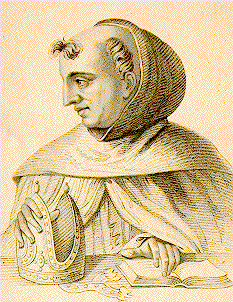
Albertus Magnus (Albert von Bollstädt) (1193 – 1280)