
Is quality measurement about proving, or improving? Is it about helping clinicians provide better care, or about satisfying funders and regulators?
The answer has usually been: both. The tension between proving and improving explains much of where quality measurement has been, and why it may need a new direction.
In the United States, quality measurement evolved from a relatively small set of accreditation and reporting activities into a large industry linked to payment, regulation, public reporting and reputation. Medicare’s Merit-based Incentive Payment System (MIPS), accelerated this shift. At one stage, clinicians could choose from more than 200 quality measures and a study of the Medicare measure inventory found 788 measures already implemented or finalised for use. [1,2]

Figure 1. Proving vs improving.
Better care did not always result
Clinicians and hospitals found themselves trapped in reporting requirements, dashboards, compliance exercises and documentation burden. Quality departments grew. Consultants flourished. Electronic health records became measurement machines. Frontline clinicians often became frustrated because measurement felt increasingly disconnected from patient care. One US study estimated that physician practices spent 15.1 hours per physician per week dealing with quality measures, costing more than $15 billion annually in the specialties studied. [3]
Part of the problem was political
Quality measures are not neutral technical objects. They are negotiated products influenced by competing interests. Professional societies want measures that reflect fairly on their members. Healthcare providers fear public embarrassment from poor scores. Regulators want standardisation and compliance. Policymakers want broad participation. Patients want measures that reflect care that matters to them.
The result has often been “low-bar” measurement: standards set low enough that most organisations can pass.
Diabetes care is an example. A clinically meaningful standard might combine glucose control, blood pressure control, lipid management, retinal screening, foot assessment and long-term outcomes. Instead, many reporting systems have relied on narrower measures, such as whether a patient’s HbA1c is above 9%. This is useful, but only identifies very poor control. It does not, by itself, describe excellent diabetes care. [4]
“All-or-none” measures are a stronger alternative. These require a patient to receive every important element of recommended care, rather than one or two convenient elements. Clinically, this makes sense. A patient with diabetes does not benefit much from glucose control if blood pressure and cardiovascular risk are ignored. The difficulty is that these measures are harder to build, harder to risk-adjust and harder to score well on.
Sepsis measurement – same problem. SEP-1, the US sepsis measure, requires a defined bundle of actions within specified time windows, including lactate testing, blood cultures, antibiotics and, in some patients, fluid resuscitation. [5] The measure has been controversial because sepsis is complex, timing is difficult to document, and rigid scoring does not capture the nuance of clinical decision-making.
Healthcare organisations tend to teach to the test.
Nevertheless, quality measurement has made important contributions. It has helped reduce healthcare-associated infections, exposed variation, improved transparency and drawn attention to safety. CDC data show that healthcare-associated infection progress in the US is tracked using standardised infection ratios, allowing systems to compare observed infections with predicted infections over time. [6]
Measurement is essential but poor measurement can distort priorities.
Fragmentation has been a major problem. When hundreds of disconnected measures are offered, organisations naturally select the ones they can report most easily or perform well on. Comparisons become difficult. Specialists may not see measures that reflect their real work. Clinicians focus on measured tasks while important aspects of system performance stay hidden.
In recognition of this problem Medicare is moving towards MIPS Value Pathways. MVPs group quality, cost and improvement activities around specialties or clinical conditions. The 2026 programme includes 27 MVPs, with examples in cardiology, ophthalmology, emergency medicine, diagnostic radiology, pathology and vascular surgery. [7] The aim is to move from scattered indicators to more coherent pictures of care.
Healthcare data systems were not designed for quality measurement
Electronic health records are also fragmented and poorly standardised. Patients receive care in doctors’ rooms, hospitals, pharmacies and laboratories that often cannot communicate effectively with one another. Even organisations using the same commercial product may structure data differently. Much of the most important information is locked inside free-text notes.
In response, the US system is moving towards digital quality measures using standards such as FHIR, or Fast Healthcare Interoperability Resources. Digital quality measures use standardised data from interoperable systems with computable specifications and code packages. [8] Electronic clinical quality measures are intended to draw data directly from electronic records and other digital sources instead of manual chart review. [9]
Artificial intelligence arrives
AI may become the biggest change in quality measurement since the electronic health record itself. The current system still depends on humans finding facts in long, messy records. One hospital study found that preparing and reporting 162 quality metrics required more than 108,000 person-hours and cost about $5 million. [10] A recent pilot study suggests that large language models using interoperable electronic health record data can accurately abstract information for complex quality measures. [11]
Quality professionals should not spend their working lives hunting through records for facts. AI should help extract data, read clinical notes, identify patterns, detect safety signals and generate near-immediate feedback. This would allow quality teams to spend more time improving care and less time producing reports.
Patient voice is a priority.
Historically, quality measurement has reflected what providers, regulators and payers considered important. Patients may define quality differently. But healthcare is not a scoreboard. It is a service delivered to people.
A technically successful operation may still leave a patient in pain, anxious, confused, functionally limited and dissatisfied with communication. Patient-reported outcome measures and patient-reported experience measures help measure symptoms, function, quality of life, trust, understanding and experience.
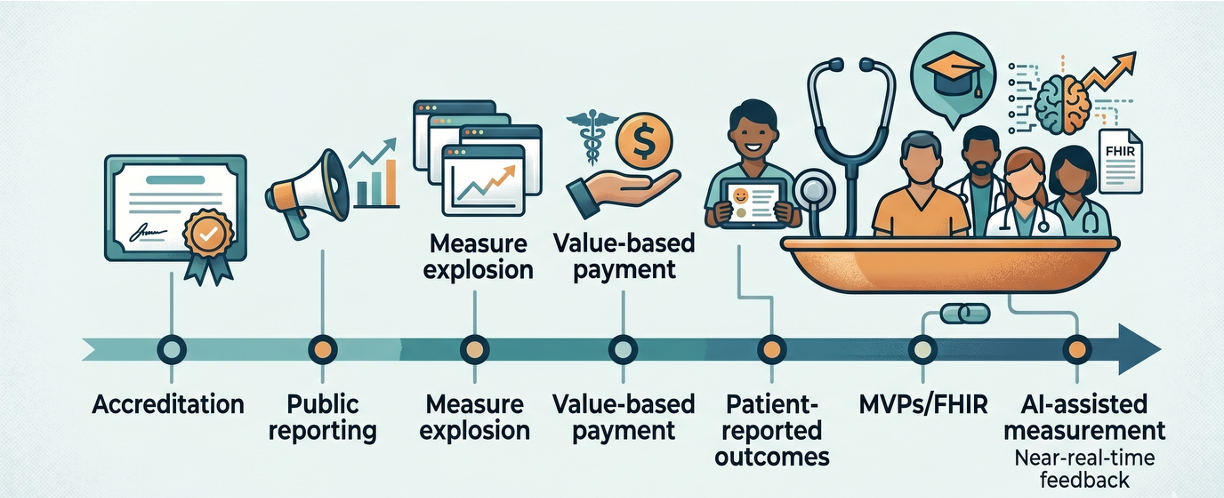
Figure 2. The US quality measurement journey
What does this mean for South Africa?
We should learn the lessons but also consider the differences. The US system is highly resourced, technologically advanced, fragmented and driven by payment incentives. South African healthcare has deeper resource constraints, a divided public-private system, is digitally immature and major workforce challenges.
South Africa’s late start is an opportunity. We can avoid building a giant compliance industry based on hundreds of disconnected indicators and choose a smaller set of meaningful measures tied to improvement priorities: maternal outcomes, surgical safety, hypertension control, care continuity in HIV, hypertension and diabetes, emergency access, perioperative outcomes and patient experience. The Office of Health Standards Compliance provides a regulatory structure for health establishment standards and inspections. [12] The District Health Barometer is a long-running platform for district-level health system performance measurement. [13] These should be strengthened.
Simple principles
Measurement without improvement capability achieves little. Perhaps the best test of a quality measure is whether frontline clinical teams and managers actually use it to improve the systems they work in. Data only matters if it is used to redesign systems, test changes and learn.
Digital infrastructure needs to grow. The National Digital Health Strategy already has an electronic health record roadmap emphasising interoperability and person-centred digital health. [14] The future of quality measurement will be more digital, automated, predictive and patient-centred.
Let’s end with the first question. Will measuring this help patients receive better care?
References
- MIPS Value Pathways (MVPs). CMS Quality Payment Program. Available at: https://qpp.cms.gov/reporting-requirements/ways-to-report/mvp
- Wadhera et al. Quality Measure Development and Associated Spending by the Centers for Medicare & Medicaid Services. Found 788 CMS measures implemented or finalised for use in CMS programmes. Available at: https://pmc.ncbi.nlm.nih.gov/articles/PMC7189223/
- Casalino et al. US Physician Practices Spend More Than $15.4 Billion Annually To Report Quality Measures. Available at: https://pubmed.ncbi.nlm.nih.gov/26953292/
- NCQA/HEDIS diabetes measures include HbA1c poor control above 9%. Available at: https://qpp.cms.gov/docs/QPP_quality_measure_specifications/Claims-Registry-Measures/2025_Measure_001_MedicarePartBClaims.pdf
- Driving blind: instituting SEP-1 without high quality outcomes data. Available at: https://pmc.ncbi.nlm.nih.gov/articles/PMC7024755/
- CDC tracks healthcare-associated infections using standardised infection ratios. Available at: https://www.cdc.gov/healthcare-associated-infections/php/data/progress-report.html
- CMS 2026 MVP guidance describes specialty- and condition-linked pathways. Available at: https://qpp-cm-prod-content.s3.amazonaws.com/uploads/3509/2026-Finalized-MVPs-Guide.pdf
- CMS definition of digital quality measures. Available at: https://ecqi.healthit.gov/dqm/about-dqms
- CMS definition of electronic clinical quality measures. Available at: https://www.cms.gov/medicare/regulations-guidance/promoting-interoperability-programs/electronic-clinical-quality-measures-basics
- The Volume and Cost of Quality Metric Reporting. Available at: https://pmc.ncbi.nlm.nih.gov/articles/PMC10245189/
- Large Language Models for More Efficient Reporting of Hospital Quality Measures. Available at: https://pmc.ncbi.nlm.nih.gov/articles/PMC11658346/
- OHSC role in South African health establishment standards. Available at: https://ohsc.org.za/inspection-tools-2/
- District Health Barometer as a South African performance measurement platform. Available at: https://dhb.hst.org.za/
- South Africa National Digital Health Strategy. Available at: https://knowledgehub.health.gov.za/system/files/elibdownloads/2023-04/national-digital-strategy-for-south-africa-2019-2024-b.pdf